
Every tonne of wet-process foamed film produced requires discharging nearly 27 tonnes of wastewater.
Conventional wet-process PU
Of the synthetic leather made worldwide today, about 55%–60% is PU-based and about 30% is PVC-based, together roughly 80%–90% or more. Wet-process PU is still the mainstream process, which means that the environmental and sustainability (ESG) risk of most synthetic leather is systemic, not a problem of individual manufacturers.
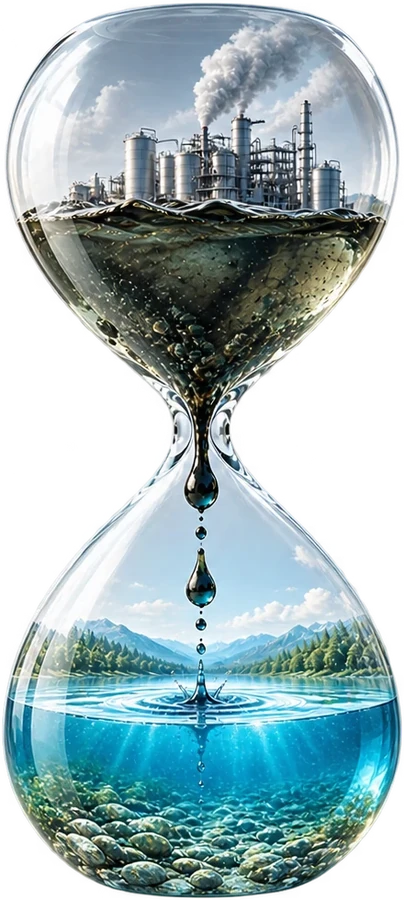
Non-toxic, wastewater-free
calendered foaming
Through calendering, TPU forms a stable, homogeneous sheet structure. Its thickness, elasticity distribution and surface properties can all be designed and controlled at the start of the process, giving highly predictable material behavior. Thanks to this structural design, ESG Technology TPU synthetic leather bonds stably with a wide range of coating materials and fabric structures and passes brand-level, high-standard tests.
An invisible number is a mountain you can see.
Every year, the volume of waste accumulated from sports-shoe midsoles alone is about 60,000 tonnes.
This waste has nowhere to go.
No recycling route, no downcycling option, only an endless linear pile-up.
Average density of midsole waste: about 250 kg/m³
60,000 tonnes = 60,000,000 kg
60,000,000 ÷ 250 ≈ 240,000 m³
With 17-tonne trucks: about 3,529 truckloads
A layer of this waste over the whole stadium would be about 45 m high (about a 15-storey building)
Waste from the midsole manufacturing of sports shoes:
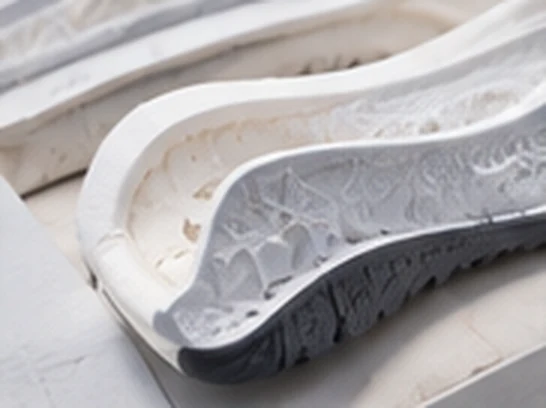 Waste from failed moulding
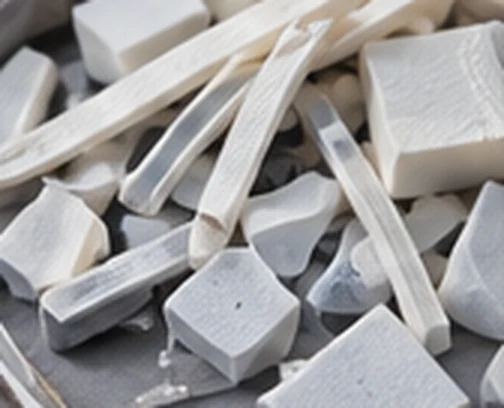 Corner trimmings after cutting
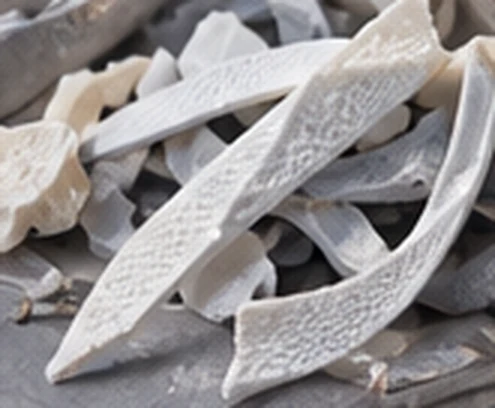 Shavings from trimming
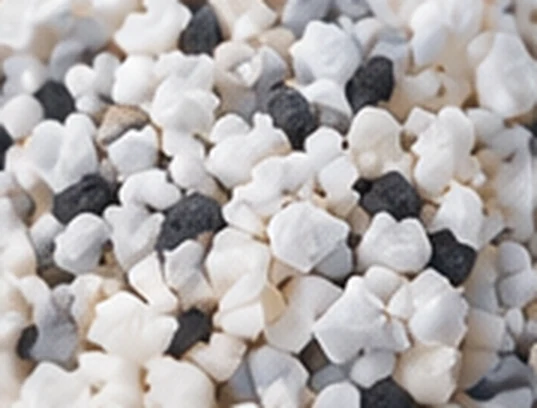 Mixed midsole waste of different materials
Zero-waste closed-loop system
ESG Technology's patented TPU can be used in secondary foam compression moulding and IP injection processes. This process is a continuous closed-loop production mechanism of waste reuse and dynamic balance.The composition of the recycled material is, in essence, made up of ESG Technology's patented TPU and EVA. Therefore, however much recycled material is added, the system only receives a mixture of the same composition ratio, which does not break the system's existing relative balance and brings the overall ratio to stability very quickly.
Based on a total of 100 kg, the first batch uses 35 kg of ESG patented TPU and 65 kg of EVA main material as the base.From the second batch on, the 10% of rejected waste produced by the previous batch (which contains the ESG patented TPU) is put back in. The proportions become about 31% ESG patented TPU, 59% EVA and 10% recycled material (containing the ESG patented TPU).This mechanism makes the weight of recycled material converge to a dynamic steady state, achieving closed-loop reuse of waste while keeping the raw-material ratio highly stable.
First batch
Cycle
Cycle
- ESG patented TPU
- EVA
- Recycled material (contains the ESG patented TPU)